
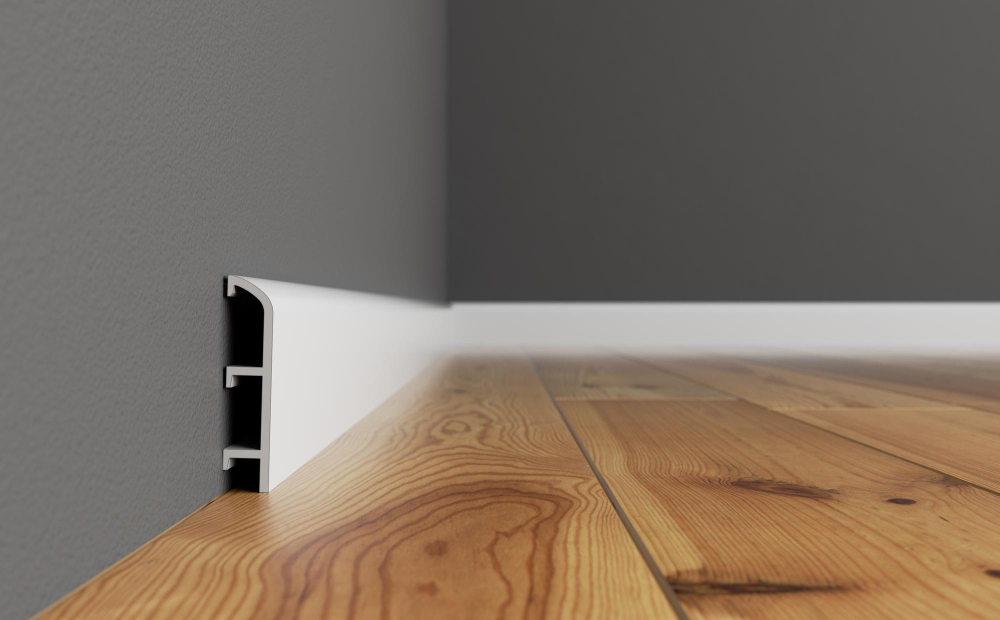
A Melbourne buyer’s guide to choosing the perfect finishing trim for timber, hybrid and vinyl floors.
Introduction: small trims, big difference
Every beautiful floor needs a crisp, tidy edge. That is the job of scotia and quad trims. These slim mouldings hide the expansion gap around your room and tie your new floor to the skirting for a polished, professional look. In 2026, Australian homes are prioritising natural textures, low‑sheen finishes and practical, durable details that can handle family life. Trims are part of that shift. The right choice will blend in quietly or frame your floor with purpose.
At Topaz Floors, we help Melbourne homeowners, renovators and builders choose trims that match their boards, their skirting and their lifestyle. Visit our Somerton showroom for hands‑on advice, colour matching and a free quote.
Quick glossary
Scotia
A small concave or beaded moulding fitted along the perimeter of a floating floor. It sits against the skirting and hides the expansion gap while allowing the floor to move.
Quad
A quarter‑round profile that performs the same job as scotia. Many retailers use the terms interchangeably.
Skirting
The larger wall board that frames the room. You can keep existing skirting and add scotia or quad in front, or remove and refit skirting after the floor goes down.
Why trims matter
Floating floors need expansion space. Trims cover the gap, stop dust collecting and protect toes and vacuum heads from catching on the edge. They complete the look.
The top 10 Australian trends for quads and scotia in 2026
Australian tastes are leaning toward sustainable materials, neutral palettes, tactile textures and practical profiles that wear well. The summary below reflects 2026 trend snapshots across the country.
1. Sustainable materials are the default
FSC‑style timber, recycled content, eco‑MDF scotia and low‑VOC finishes have moved from nice‑to‑have to expected. Customers want cleaner indoor air and products with a lighter footprint. If you are finishing a family home or rental, sustainable trims are an easy win that does not compromise looks.
Topaz tip: Ask for low‑VOC adhesives and sealants and choose pre‑finished trims where possible to minimise on‑site fumes.
2. Natural and neutral colours
Soft oak, ash, pale walnut and sandy beige dominate. These hues sit well with white or off‑white skirting, modern profiles and coastal or Scandinavian schemes. If you prefer a trim that disappears, match your skirting colour. If you want a framed look, match the floor within one to two tones.
3. Matte and textured finishes
Wire‑brushed, hand‑scraped and low‑gloss wraps are in. They hide dust and small scuffs far better than gloss, and they echo the low‑sheen trend taking over living areas and bedrooms.
4. Oversized profiles for visual calm
Slightly deeper or taller scotia creates a deliberate junction between floor and wall. It works especially well with high ceilings, tall skirting or large open spaces. The aim is balance, not bulk.
5. Mixed media and layered details
One size does not fit all edges. You might use aluminium end caps at sliding doors, a timber‑look scotia along walls, and a reducer at a tiled threshold. Mixing profiles delivers durability where it counts and a clean finish everywhere else.
6. Hybrid and vinyl matching
The growth of waterproof hybrid and vinyl plank floors has driven demand for trims that match décor papers and stand up to regular mopping. Expect waterproof surface wraps and resilient cores that suit kitchens, living zones and laundries.
Comparing floor types for busy homes or apartments? Start with Premium Floorboards.
7. Bold patterns and geometric statements
Herringbone and chevron floors are influencing trim choices. A slightly darker or lighter trim can outline the perimeter and emphasise geometry without shouting.
8. Professional restoration
Renovators are sanding, polishing or repainting existing timber quads to retain period character while freshening the finish. It is cost‑effective and keeps timber in use.
9. Low‑maintenance, hard‑wearing edges
Busy households prefer edges that hide dust and shrug off bumps from vacuums and toys. Textured wraps and practical neutrals are popular because they look tidy for longer.
10. Custom and local Australian species
Jarrah, Blackbutt and Spotted Gum trims are popular for matching engineered or solid timber floors. The result is cohesive and supports local species preferences.
How to choose trims like a pro
Step 1. Decide how visible you want the edge
- Invisible: match the skirting colour, most often a soft white.
- Framed: match the floor within a shade or two to create a border.
- Feature: use a contrasting tone in rooms where you want to emphasise pattern.
Step 2. Pick a profile that suits your room
- Standard scotia: suits most 8 to 12 mm floating floors.
- Deeper scotia or quad: balances tall skirting or larger expansion gaps.
- Squareline capping: smart where skirting is not possible, like against sliding door frames.
- Aluminium trims: perfect at external door sills and high‑traffic thresholds.
Step 3. Choose the right material for the job
- Pre‑finished MDF scotia: affordable, consistent, and available in many woodgrains and whites. Modern wraps are tough and low‑sheen. Good for living and bedroom zones.
- Timber scotia or quad: ideal with real timber floors or when you plan to stain to match. Can be sanded and refinished in future.
- PVC or waterproof composite: great in kitchens, laundries and commercial settings that cop regular mopping.
- Aluminium: sleek and durable at transitions and edges that get more impact.
These choices mirror 2026 preferences for sustainable materials, matte finishes and mixed media where it is practical to do so.
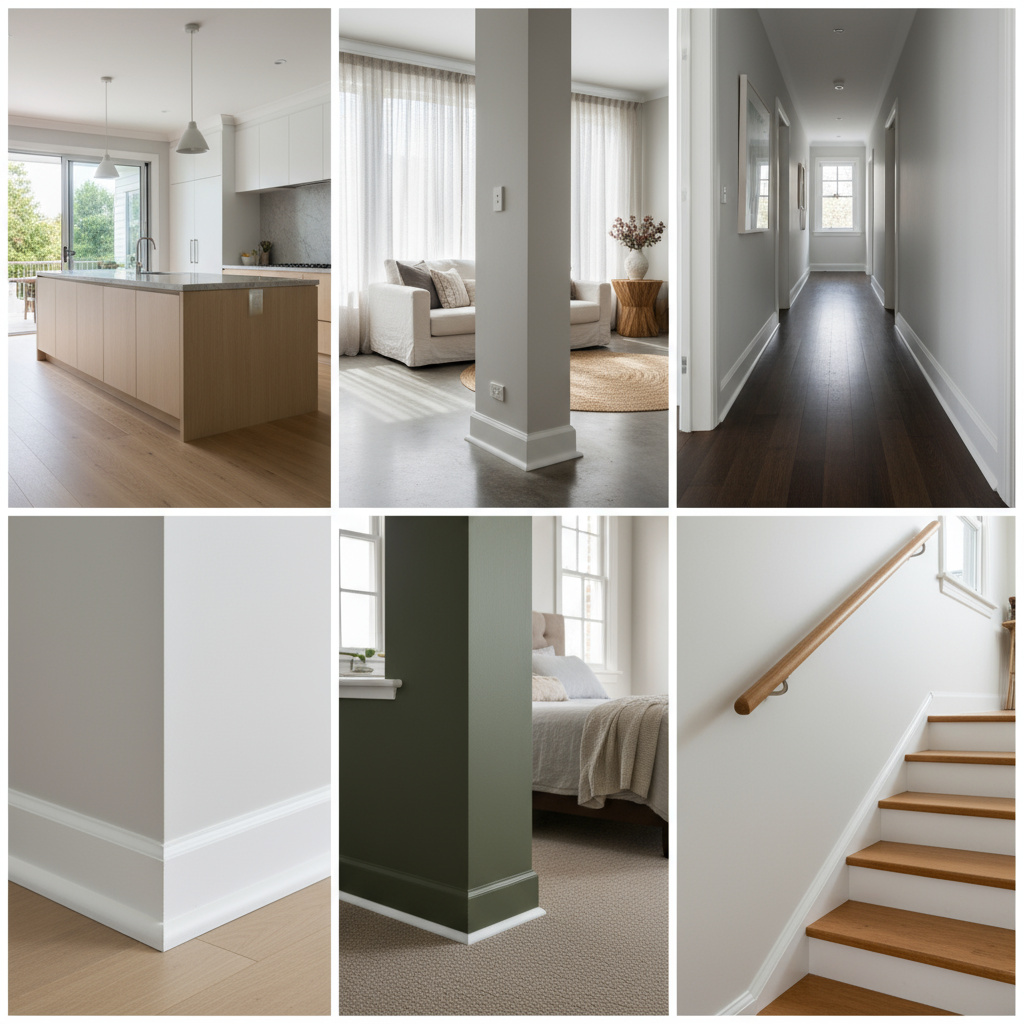
Room‑by‑room recommendations
Different rooms place different demands on trims. Use these pairings to narrow the field.
Kitchens and meals
- Best fit: colour‑matched waterproof scotia or PVC body.
- Why: frequent mopping, spilled water and moving stools. Durability first.
- Design cue: match the trim to the board in open plan spaces so the perimeter disappears.
Living rooms
- Best fit: matte MDF scotia in a woodgrain or warm white.
- Why: low‑gloss hides daily scuffs and fits the soft, natural look that is trending.
Hallways and entries
- Best fit: slightly oversized scotia with a durable wrap.
- Why: defined lines help long corridors feel intentional and cope with knocks.
Bedrooms
- Best fit: standard scotia matched to skirting for a calm, uncluttered look.
- Why: bedrooms benefit from quiet details and simple maintenance.
Laundries and powder rooms
- Best fit: PVC scotia or aluminium end caps where needed.
- Why: moisture, tight spaces and appliance movement.
Stairs and landings
- Best fit: stair nosing with matching scotia at skirting returns.
- Why: safety and durability at edges, seamless look at walls.
Round out the job with matching transitions, reducers and end caps. Browse Trims, or ask our team which profiles suit your layout.
Pairing trims with Melbourne interiors
Coastal apartment
- Floor: pale oak hybrid
- Trim: warm white scotia
- Why it works: light, airy feel that enlarges compact spaces. Waterproof edge for easy cleaning in open plan living.
Period renovation
- Floor: Blackbutt or Spotted Gum engineered timber
- Trim: timber quad stained to match, or painted white under tall decorative skirting
- Why it works: celebrates character, aligns with local species preferences, and supports restoration where possible.
Contemporary townhouse
- Floor: mid grey laminate in living, hybrid in kitchen
- Trim: aluminium end caps at doors, colour‑matched MDF scotia along walls
- Why it works: tough at thresholds, soft and subtle where it should disappear.
Installation: go from good to flawless
A neat trim starts with planning and ends with touch‑ups. Here is the sequence our team recommends.
- Plan the expansion gap
Follow the floor manufacturer’s requirement around the entire perimeter. - Check your run
Walk the space and note internal corners, external corners, skirting returns and any obstructions such as door stops and power points. - Measure walls and pre‑cut
Cut lengths slightly over and trim down to fit. Most scotia is supplied in 2.4 m lengths. - Choose the right corner joint
- Outside corners: mitre both pieces at 45 degrees.
- Inside corners: cope one piece so it nests tightly into the other. Coping hides minor wall irregularities better than a straight mitre.
- Dry fit the room
Lay the pieces in place before fixing. This is where you fine‑tune mitres for tight, shadow‑free joins. - Fix to the wall or skirting only
Use panel pins, brad nails or a suitable construction adhesive. Never fix trims to the floating floor. It must move freely. - Maintain a hairline clearance
Leave about 1 to 2 mm between the bottom of the trim and the floor surface. This prevents squeaks and avoids trapping grit. - Seal sparingly and paint if required
A fine bead of painter’s caulk along the top edge helps close hairline gaps to skirting. Wipe immediately for a crisp line. Paint with a matching sheen. - Final check and clean
Vacuum edges and corners, then run your hand along the top line to feel for proud nails or rough joins. Touch up as needed.
Need an installation kit, mitre box, spacers or adhesive? We can sort you out in‑store. See Flooring Tools & Equipment.
Common mistakes to avoid
- Fixing trims to the floor
This prevents movement and can lead to creaking or buckling. Always fix to the skirting or wall. - Skimping on the expansion gap
A trim cannot compensate for a tight install. Floors must have room to move. - Poor corner work
Loose mitres catch the eye. Dry fit, adjust and only then fix. - Mismatched sheen
A glossy trim beside a matte floor stands out. Choose similar sheen levels. 2026 preferences lean strongly to matte and textured surfaces. - Under‑ordering
Corners and short returns increase waste. Add at least 10 percent to your calculated length.
Colour matching made simple
- Set your intent
Disappear, frame or feature. Decide first and your choices become straightforward. - Match undertones
Oaks can be warm, cool or neutral. Hold samples against boards in natural light to check undertones rather than relying on memory. - Consider the room’s light
South‑facing rooms appear cooler. You may want a slightly warmer white on trims so the junction does not look cold. - Test a full length
A tiny chip can mislead. A full length against the wall shows how skirting profiles and shadows interact with your colour. - Match sheen
Keep the family consistent. Matte floors pair best with matte trims.
Measurement and ordering cheat sheet
Trims usually come in standard 2.4 m lengths. Here is a quick way to calculate your order.
Example A: simple rectangle
Room size: 5.4 m by 3.8 m
Perimeter calculation:
- Sum of adjacent sides: 5.4 + 3.8 = 9.2
- Multiply by 2 for all four walls: 9.2 × 2 = 18.4 m
- Divide by 2.4 to get number of lengths: 18.4 ÷ 2.4 = 7.666…
- Round up: 8 lengths
- Add 10 percent wastage: 18.4 × 1.10 = 20.24 m
- Divide again: 20.24 ÷ 2.4 = 8.433…
- Round up: 9 lengths
Example B: open plan with an L‑shaped nook
Main area: 7.0 m by 4.5 m
Nook: 3.0 m by 2.0 m
Perimeter calculation:
- Main rectangle: 2 × (7.0 + 4.5) = 23.0 m
- Nook inside edges: 2 × (3.0 + 2.0) = 10.0 m
- Combined: 23.0 + 10.0 = 33.0 m
- Lengths at 2.4 m: 33.0 ÷ 2.4 = 13.75 → 14
- Add 10 percent: 33.0 × 1.10 = 36.3 m
- At 2.4 m per length: 36.3 ÷ 2.4 = 15.125
- Round up: 16 lengths
Pro tip: Order one extra length if your plan has many external corners. Offcuts rarely land exactly where you want them.
Sustainability deep dive
If you want a greener project without complicating installation, trims are an easy place to make better choices.
- Material selection
Look for FSC‑style timber profiles or MDF products with recycled content. Low‑VOC surface wraps and paints support healthier indoor air, especially in closed‑up winter months. - Smart matching
Use waterproof scotia with hybrid or vinyl floors in wet or high‑cleaning zones. You will replace less over time and keep edges consistent with the floor’s performance. - Support local species
Blackbutt, Jarrah and Spotted Gum trims pair beautifully with matching floors and reflect local species preferences across Australia in 2026. - Choose a matte texture
Matte surfaces hide scuffs better than gloss, so you will repaint or replace less often. This trend is strong nationwide.
Maintenance and care
- Vacuum edges weekly with a soft brush to remove grit.
- Wipe with a damp microfibre cloth. Avoid saturated mops on MDF or timber trims.
- Use felt pads under furniture to protect edges.
- Keep a small pot of touch‑up paint for white scotia so repairs blend seamlessly.
- Timber trims can be lightly sanded and refinished if they wear. Restoration is an increasingly popular choice in character homes.
Cost factors and budgeting in Melbourne
Pricing depends on materials, finish and job complexity. These are the main drivers.
Material
Timber and aluminium trims generally cost more than wrapped MDF or PVC. Local species can add value when paired with matching floors.
Profile size
Oversized trims use more material and require careful corner work, though they can make painting edges easier and deliver a premium look.
Corners and doorways
More cuts mean more time. Open plan rooms are faster to finish than hallways with many returns.
Finishing
Pre‑finished profiles save labour. If repainting, include sanding, priming and drying time in your quote.
Moisture management
PVC or waterproof wraps are a smart investment in wet zones and commercial spaces. They pay back in durability and lower maintenance.
If you would like a tailored estimate, bring a rough floor plan to our Somerton showroom. We will measure, match colours and quote materials, trims and the small tools you will need to finish neatly.
Expert troubleshooting: edge cases and how to handle them
Out‑of‑square corners
Cope inside corners rather than mitring. The face piece stays tight even when the wall is not perfect.
Uneven slab or wavy skirting
Use short sections to reduce gaps or add a fine bead of painter’s caulk along the top edge. Keep the bottom clear for floor movement.
Different floor heights at doorways
Use a reducer rather than a T‑mould. It creates a safe slope between levels.
Glass sliders with no skirting
Finish with an aluminium end cap. It covers the gap cleanly and resists impact from door movement.
Large rooms above the maximum continuous length
Plan expansion breaks with matching trims to maintain performance and appearance.
FAQs
Do I always need scotia or quad with floating floors?
Yes. Floating floors require an expansion gap. Trims hide the gap so movement does not crack joints or expose edges.
Should I match scotia to the floor or the skirting?
Both work. Match skirting for an invisible edge. Match the floor to frame the room or emphasise patterns like herringbone. Natural and neutral palettes dominate in 2026, so either option will sit comfortably in most homes.
Are larger trims dated?
No. Slightly deeper profiles are on the rise because they look deliberate and balance taller skirting and high ceilings.
Can I reuse or restore my existing trims?
Often yes. Timber quads can be sanded and refinished to great effect in period homes.
Do you supply the rest of the finishing pieces?
Yes. We stock transition strips, reducers, end caps and stair nosing so every edge is safe and tidy. Browse Trims or ask in store.
Why choose Topaz Floors for trims in Melbourne
Perfect matching
We carry trims to suit the timber, laminate, hybrid and vinyl ranges we sell, including neutral and natural palettes that are popular today.
Local advice
Melbourne homes range from heritage terraces to modern apartments. Our team understands movement in older walls, slab moisture, strata sound expectations and daily‑use wear. Visit our Somerton showroom for friendly, expert help and a free quote.
One‑stop convenience
Pick up boards, underlay, trims and the right tools in one visit so you finish on time and on budget. See Underlay and Flooring Tools & Equipment to complete your list.
Your next steps
- Bring a sketch or measurements of your rooms.
- Visit our Somerton showroom to see finishes in person and colour‑match trims.
- Ask for a bundled quote for boards, underlay, trims and installation essentials.
- Book delivery or pickup to suit your schedule.
Conclusion: finish strong in 2026
Scotia and quad may be small, but they make or break the finish of your floor. Choose a profile and material that fit your room, match the sheen and colour to your floor or skirting, and think ahead about moisture and maintenance. The 2026 direction is clear. Sustainable materials, neutral palettes, matte textures and practical mixed‑media details will give you an edge that looks good for years. If you want help putting it all together, we are ready in Somerton with samples, advice and quick quotes.